01
Bury the OxyGrid in sediment
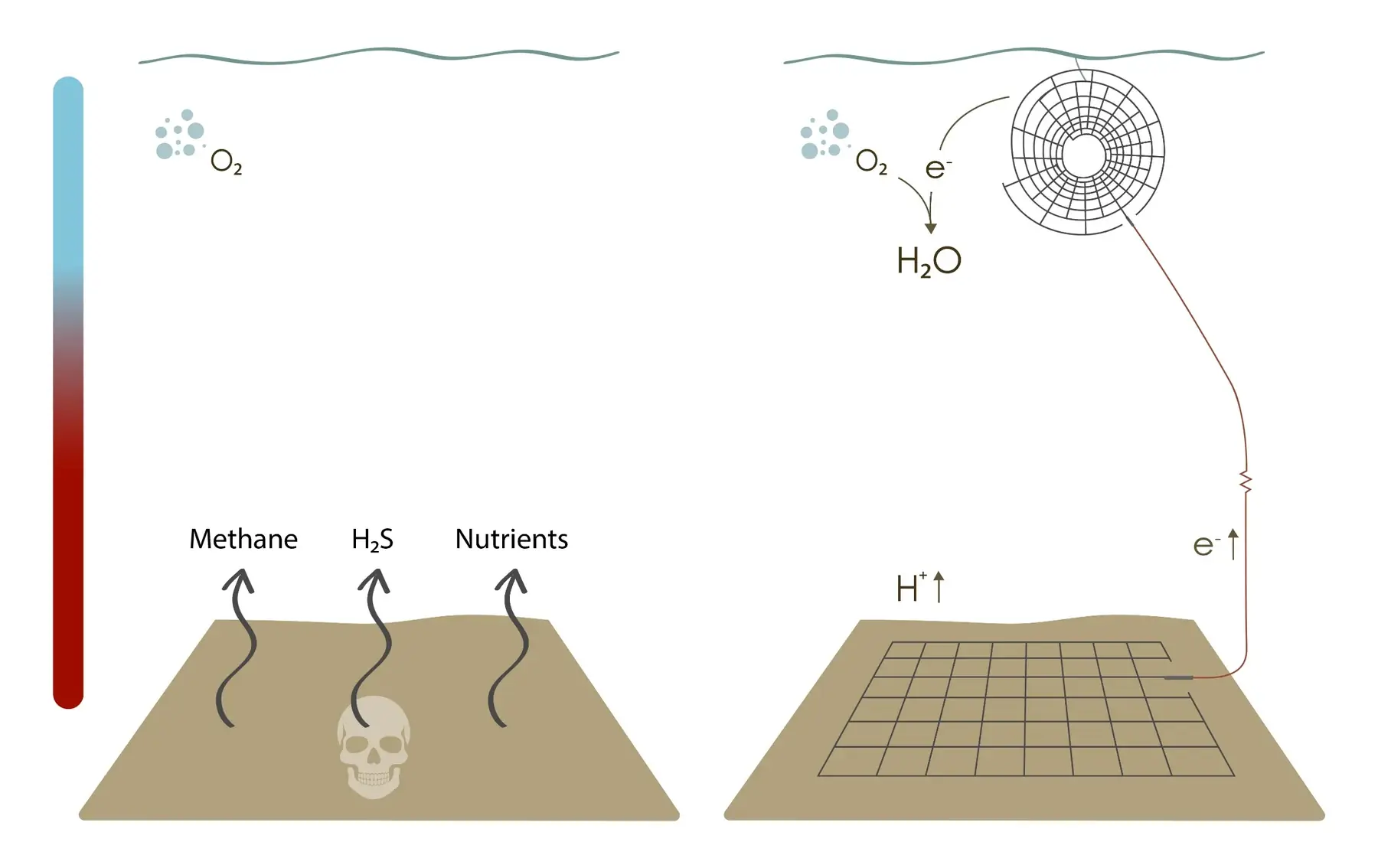
A low-profile conductive grid is placed inside oxygen-depleted sediment.

Our technology
This new use of a conductive OxyGrid reconnects oxygen-rich water with depleted sediment, reducing methane, sulphide, and nutrient release.
The Redoxa principle
Redoxa gives sediment bacteria an electrical route back to oxygen without pumps, motors, or chemicals.
OxyGrid principle
01
Methane, H2S, and nutrients are the pressure points.
02
The grid gives microbes a pathway back to oxygen.
03
The system can be monitored through voltage.
Field setup
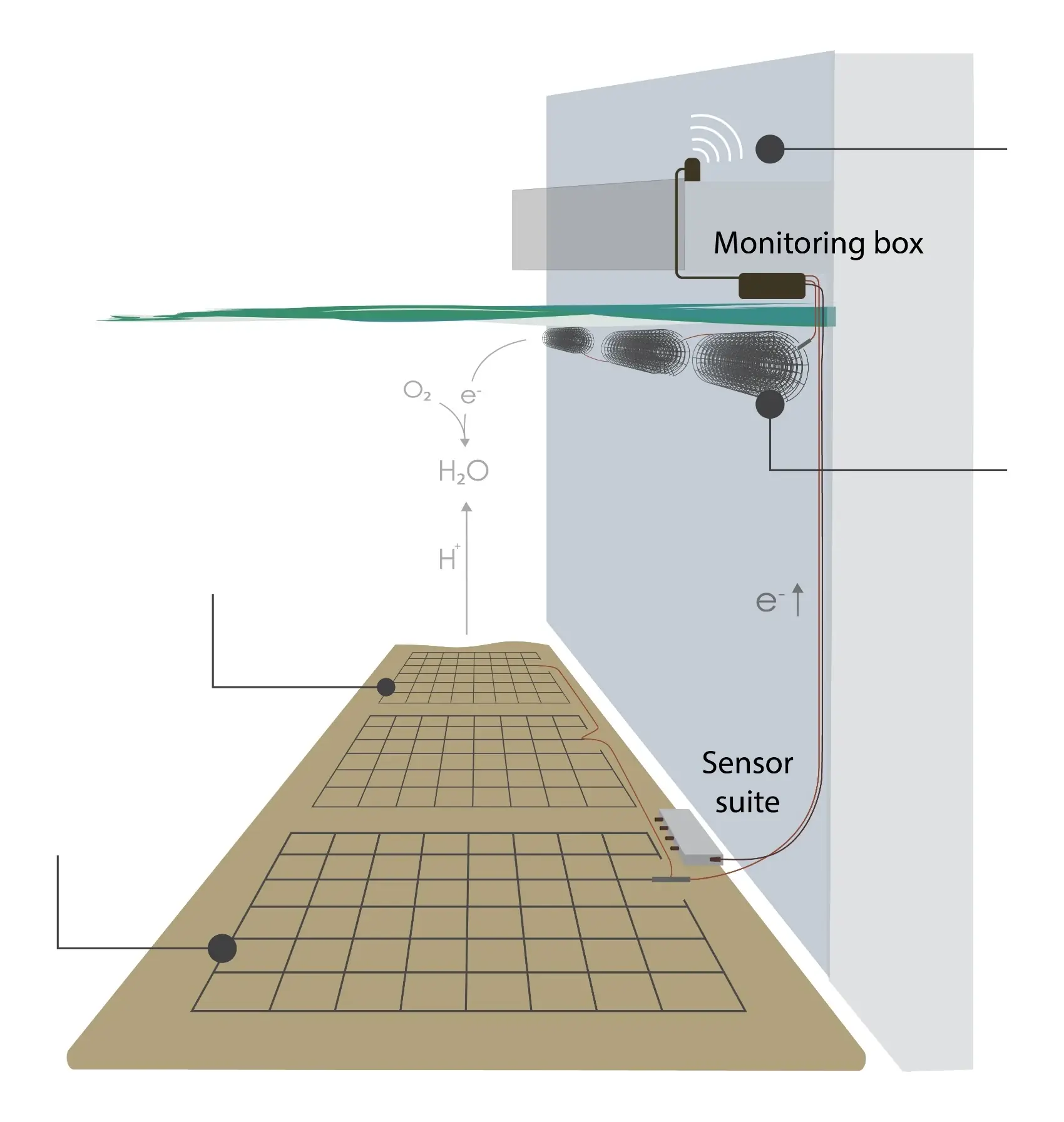
A low-profile conductive grid is placed inside oxygen-depleted sediment.
The buried grid connects to oxygenated water and creates a power-free redox pathway.
Sediment bacteria regain electron acceptors. Methane, H2S, and nutrient release fall as conditions stabilize.
Sensors track performance, and habitat modules can be added where the site allows it.
Field evidence
80-99% methane reduction in Redoxa validation material
>80% reduction in hydrogen sulphide and phosphate indicators
Increased eelgrass survival after sediment conditions improve
120 m2 active grid in Copenhagen, with larger pilots being scoped
Deployment characteristics
Redoxa deployments are scoped around footprint, duration, installation method, safeguards, and full retrieval.
No external energy requirement
No chemical release or contamination pathway
No dredging, jetting, or seabed excavation
Adaptable to aquaculture, eelgrass, reefs, and mussel habitats